Obsession in Oak and Stone: A Peek Inside California's Most Passionate Private Wine Cellars
There's a particular kind of quiet that exists inside a serious wine cellar. It's not just the absence of noise—it's the presence of time. Thousands of bottles resting in the dark, each one a small wager against patience, a bet that something alive inside glass and cork will eventually become something extraordinary. For a growing community of California wine enthusiasts, building and tending that kind of space has become a defining passion.
We talked to collectors from Napa Valley down to Santa Barbara County—some with collections numbering in the hundreds, others with tens of thousands of bottles—to understand what drives this particular brand of devotion and what it looks like in practice.
The Cellar as Personal Statement
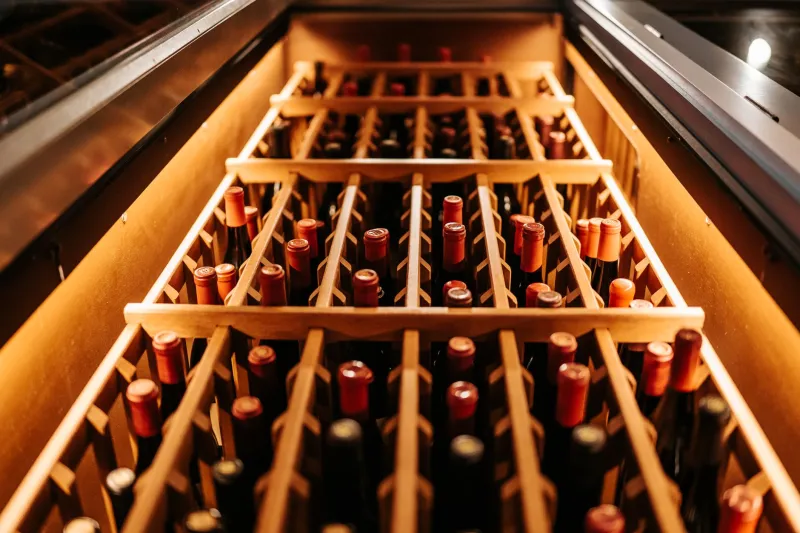
Meet David Kwan, a tech entrepreneur based in Los Altos Hills whose 4,200-bottle underground cellar took two years and a structural engineer to complete. The room sits beneath his kitchen, accessible via a spiral staircase that descends into a space lined in reclaimed redwood and fitted with dual cooling zones.
"I didn't set out to build something this serious," he laughs, gesturing at row after row of Burgundy-style bins holding everything from Napa Cabernet to obscure Sta. Rita Hills Pinot Noir. "But once you start drinking wines with real age on them, you can't go back. You realize most wine never gets the chance to become what it was meant to be."
That realization—that time transforms wine in ways no amount of money can shortcut—is the foundational philosophy of the serious collector. It's also what separates hobbyists from the truly committed. Kwan doesn't just store wine; he tracks it obsessively using CellarTracker, annotating bottles with tasting notes from each opening and projecting drink windows years in advance.
Acquisition: The Art of Getting the Good Stuff
For collectors chasing California's most sought-after bottles—think Screaming Eagle, Harlan Estate, or the various Burgundy-inspired labels from the Sta. Rita Hills—the acquisition game is its own sport. Mailing lists remain the primary currency. Getting on the list for a coveted producer like Sine Qua Non or Scarecrow can take years of patience, referrals, and sometimes sheer luck.
"I've been on waitlists longer than some people have been married," jokes Elena Vasquez, a Santa Barbara attorney whose 1,800-bottle collection skews heavily toward Central Coast producers. "But that's part of the culture. When you finally get the allocation call, it genuinely feels like something."
Vasquez has developed a secondary strategy she calls "fishing downstream"—identifying winemakers before their labels become famous. She followed several winemakers from their early careers at larger estates, buying their first solo vintages before critics discovered them. Several of those bottles have appreciated significantly in value, though she insists she has no intention of selling.
"The point was never the money," she says. "The point was being there from the beginning. It's like being a fan before the band got famous."
Beyond Napa: The Geography of Obsession
While Napa Valley remains the gravitational center of California's collector culture, the geography of serious collecting has expanded considerably over the past two decades. Sonoma Coast Pinot Noir, Santa Cruz Mountains Cabernet, and the wild, windswept expressions coming out of the Sta. Rita Hills have all developed passionate followings.
Robert Tran, a retired physician in Pasadena, built his 3,000-bottle cellar specifically around what he calls "the other California"—producers working outside the Napa mainstream. His bins hold bottles from Bedrock Wine Co., Broc Cellars, and a rotating cast of small-production natural wine producers from the Sierra Foothills.
"Napa is incredible, but it tells one story," he explains. "California wine is actually dozens of stories happening simultaneously. My cellar is my attempt to hold as many of those stories as I can."
His cellar design reflects that philosophy—organized not by region or grape variety but by what he calls "emotional resonance," groupings of bottles tied to specific meals, travel memories, or relationships. A section near the back holds nothing but wines shared with his late wife. He hasn't opened any of them in three years.
The Psychology of the Collector
It would be easy to reduce wine collecting to status signaling or investment strategy, but spend any time with serious collectors and a more complicated picture emerges. There's genuine intellectual engagement—the study of terroir, climate, winemaking philosophy, and vintage variation that can consume years of focused attention. There's the social dimension, the communities built around shared tastings and the generous culture of opening rare bottles for friends.
And then there's something harder to name. A kind of stewardship impulse. The sense that these bottles are passing through your hands rather than belonging to you.
"I think about the person who's going to drink some of these wines after I'm gone," says Kwan. "I want them to be in perfect condition. I want whoever opens them to get the full experience the winemaker intended. That responsibility keeps me honest about storage, about not drinking things too early."
Getting Started Without Going Broke
For those inspired to start their own collection, the experts we spoke with offered consistent advice: start with what you love, not what scores well. Buy wines from producers whose stories resonate with you. Invest in proper storage before you invest in expensive bottles—temperature stability matters more than any single acquisition.
Vasquez recommends new collectors spend their first year drinking widely and taking notes. "Figure out what regions and grape varieties genuinely excite you before you start committing serious shelf space," she says. "Your cellar should reflect your palate, not someone else's rating system."
And perhaps most importantly: open the bottles. The greatest sin in wine collecting, every enthusiast we spoke with agreed, is hoarding without drinking.
"A cellar that never gets opened is just a really expensive storage unit," Tran says with a grin. "Wine is meant to be shared. That's the whole point of this ridiculous, wonderful hobby."
From vine to table, the journey of a great California wine might span decades and pass through multiple hands. But somewhere along the way, in a temperature-controlled room carved into hillside or tucked beneath a kitchen floor, someone is keeping faith with that journey—waiting, tending, and eventually, joyfully, pulling the cork.